
Proxy Service Level Agreements: Commitments and Monitoring
When a business uses proxies in its day-to-day work, it needs to know what level of service the provider undertakes to deliver. Can the connection be relied on? How will a fault be handled? What happens if the promised level is missed? A service level agreement, or SLA, sets out these commitments and how they are assessed.
An SLA is one part of a provider’s service policies. This article explains industry practice; the commitments described below are not promises made by ProxyCompass. Information about ProxyCompass appears in the separate section at the end.
What an SLA establishes

An SLA gives a service commitment a measurable form. It identifies the service covered, the required level of performance, the method used to check it, and the response to a breach. It may be a public document applying to a product, part of the service terms, or an agreement with an individual customer.
A statement such as “reliable proxies” says little about what must be delivered. An availability commitment becomes meaningful when it specifies which part of the service is covered, what counts as unavailable, and the period over which results are assessed. The same applies to support: a response deadline needs a starting point, a defined response, and applicable support hours.
The technical limits of a package and its SLA serve different purposes. A connection limit describes the load a customer may place on the service. An SLA describes the service level promised under the applicable conditions. Neither a package specification nor a historical uptime chart automatically establishes an SLA commitment.
What providers can commit to

Availability is a common subject of an SLA. Support response times may be covered too. Restoration deadlines and performance thresholds are additional commitments only where they are expressly included.
| Commitment | What it concerns | What needs to be defined |
|---|---|---|
| Availability | Whether the covered proxy service is usable | The service or IPs covered, the failure criteria and the assessment period |
| Support response | How quickly an eligible report receives a response | The support channel, operating hours and what qualifies as a response |
| Restoration | How quickly service must be restored after a fault | When the clock starts, the incident category and the accepted recovery result |
| Performance | Connection delay, throughput or another specified measurement | The measurement points, test conditions and applicable load |
For proxies, the object of the commitment matters. A provider may measure a gateway, individual proxy addresses, or a pool. A reachable gateway does not by itself prove that every proxy server or device behind it works. A pool-level commitment also needs a rule for handling failures that affect only part of the pool.
Performance measurements need similar care. The time taken to open a connection to the proxy is different from the time taken to download a page through it. The second measurement includes more of the route and the destination website’s response. A performance promise needs to state which measurement it concerns.
Round-the-clock support describes when a support service operates. A first-response commitment describes how soon someone must respond. A restoration commitment describes when service must work again. These are separate obligations; one does not automatically include the others.
How providers maintain the promised service level
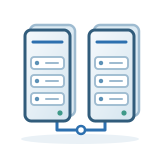
Meeting an SLA requires both working infrastructure and an organized response to faults. The measures below explain how providers can maintain service; they are not a list of features that every provider necessarily offers.
Redundant servers and network connections provide alternatives when equipment or a link fails. For that reserve to help, it must not depend entirely on the component that has failed. Several proxy servers connected through the same failed network device can all become unavailable together.
Traffic management can direct new connections to healthy servers and stop assigning them to a failed node. In a rotating pool, this may include removing unavailable proxy servers or devices from selection. With a fixed list, supplying a replacement address can restore access, but it does not preserve the original IP. A commitment to keep service working should therefore not be read as a promise to retain every address or active session.
Capacity planning provides room for changing demand and equipment failures. If all remaining servers are already fully occupied, moving traffic away from a failed server can overload them too. Providers monitor resource use and expand or redistribute capacity before it becomes a persistent bottleneck. Connection and request limits help keep workloads within the service’s operating conditions.
Maintenance and software changes also need planning. A provider can move traffic before servicing equipment, test an update on a limited part of the system, and keep a way to reverse a faulty change. These measures reduce the chance that routine work causes a larger interruption.
Finally, alerts need people who can act on them. Responsibilities, access to the affected systems and procedures for involving network or data-center specialists all affect how quickly service can be restored.
How compliance is measured

Monitoring has two jobs: detect faults while they are happening and retain measurements for assessing the service over time. An alert that wakes an engineer and a monthly availability report may use the same observations, but they answer different questions.
Internal monitoring tracks the provider’s own systems: running processes, resource use, connection errors and network health. It can reveal developing problems, such as an exhausted connection capacity, before the entire service stops responding.
External checks test what a customer can actually do. For a proxy, a useful check can authenticate, connect through the proxy to a controlled destination, and verify that the expected response arrives. Simply finding an open port leaves much of this path untested. A controlled destination also helps avoid confusing a proxy fault with an unrelated website failure.
The observations need enough detail to locate an incident: the address or gateway tested, timestamp, result and relevant error. The interval between checks determines how much can be observed. Widely spaced checks can miss brief interruptions, while a check from only one network may miss a routing problem elsewhere. A test of selected addresses should not be presented as continuous proof that every IP in a large pool was working.
The agreement then determines how those observations are counted. Availability can be calculated from eligible service time or from qualifying requests, depending on the definition. The assessment period, treatment of partial failures and applicable exclusions must match that calculation. A percentage without these rules does not fully describe the measurement.
Customers can keep their own measurements alongside provider reports. A public status page is useful for service-wide events, while account reports or individual checks can show a narrower problem. The SLA should identify the records used to assess a claim and any information the customer must supply.
How a service incident is handled

An incident can be detected by automated checks or reported by a customer. The provider needs to establish what is affected: one address, a location, authentication, a gateway, or the wider service. This helps route the problem to the people who can fix it and determine its priority.
The immediate task is to restore usable service. That may involve restarting a failed process, moving traffic, reversing a change or working with the network operator. Finding and removing the original cause can take longer than restoring access. A temporary recovery and a permanent repair are therefore distinct stages.
Customer communication needs its own responsibility. During a wider outage, engineers may be working on recovery while support staff collect reports and publish updates. If an SLA specifies update intervals or escalation deadlines, those are commitments that can be checked separately from the repair itself.
Recovery also needs verification. The provider should confirm that affected connections work again and watch for recurring errors. Where reports are supplied, the record can include the incident period, affected services, action taken and measures intended to prevent a repeat. The level of detail available to customers depends on the service terms.
Where the commitments apply

An unsuccessful request does not identify its cause by itself. Incorrect credentials, an expired package, a connection limit, a destination-site refusal and a failed proxy server can all interrupt a task, but they concern different parts of the service.
The SLA defines which of those parts the provider has undertaken to cover. Maintaining a proxy connection does not automatically promise that an independent website will accept the IP or return the content a customer wants. Likewise, a customer’s local network problem is different from a fault inside the provider’s infrastructure.
Scheduled maintenance and other exclusions need stated conditions. A maintenance exclusion may depend on advance notice or a specified maintenance window. The mere fact that work was performed does not establish how the interruption should be counted. The applicable agreement supplies that rule.
Dependencies also need clear treatment. A proxy service may use a hosting company, transit network or other supplier. Whether an interruption involving that supplier is excluded depends on the agreement; outsourcing part of the infrastructure is not, by itself, an explanation of the customer’s SLA coverage.
What happens when an SLA is not met

Restoring service addresses the technical problem. The SLA’s remedy addresses the missed commitment. One form used by providers is a service credit: an amount applied toward later service charges. Other arrangements may provide an extension or a refund, but the applicable document must establish the remedy.
The calculation needs a defined fee base. A credit can be linked to the affected service rather than every item in the customer’s account. Different levels of failure may produce different credits, and a maximum can apply. These rules explain what the SLA provides; a missed commitment does not by itself establish reimbursement of every loss caused by an interrupted task.
A customer may need to submit a request within a stated period. Relevant information can include the affected service, incident times with a timezone, and connection-error records. The request is assessed using the procedure and evidence specified in the SLA.
This is separate from an ordinary purchase refund policy. A refund window concerns the terms for returning a purchase; an SLA remedy concerns failure to meet a defined service commitment during use.